An illustrated guide
Where does knowledge come from?
Common sense says we learn by looking: observe, generalise, repeat. David Deutsch argues that no knowledge was ever made that way. We guess, and we use the world to catch our guesses out.
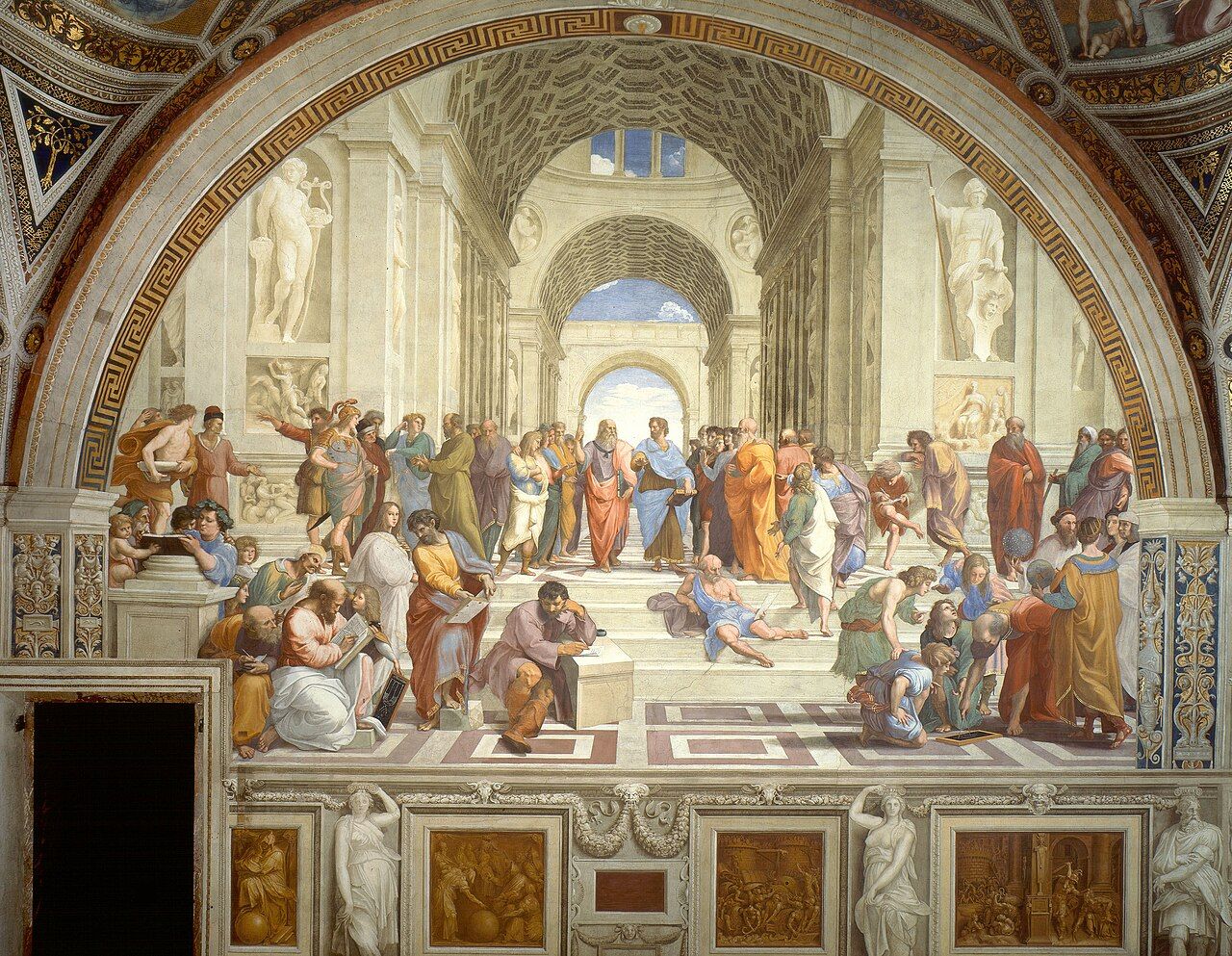
This site starts from the first four chapters of Deutsch's The Beginning of Infinity (2011) and from the constructor theory of knowledge he develops with Chiara Marletto. It asks four questions. Where does knowledge come from? What makes some of it good? What is it, physically? And can anything other than a human being make it?
The answer it defends comes from Karl Popper and from Deutsch. All knowledge begins as conjecture. Observation and argument never prove a theory; they find its errors. A good explanation is one that is hard to vary. And because errors can always be found and corrected, the growth of knowledge has no limit.
From there, each major view of knowledge gets a page of its own: what it claims, what drives it, and where it meets and parts from Deutsch. Each has an interactive figure, from Meno's square to Bayes' theorem.
Why a fourth site
The three sister sites left one idea doing all the work without naming it: knowledge grows, and nobody can predict how.
The time site replaced the flowing present with a vast collection of snapshots, ordered by the records each one holds of the others. The mind site drew a line between systems that run inherited routines and systems that invent explanations. The free will site asked what freedom could mean in a universe of physical law. Each answer leaned on the same thing: physical structures that carry knowledge, and a few rare systems that create more of it. This site puts that thing at the centre.