Cincinnati, 1922–1996
Thomas Kuhn
A physicist who went to the history of science to prepare a course, and found that it did not look like the textbooks said. His short book of 1962 put the word "paradigm" into everyday speech.
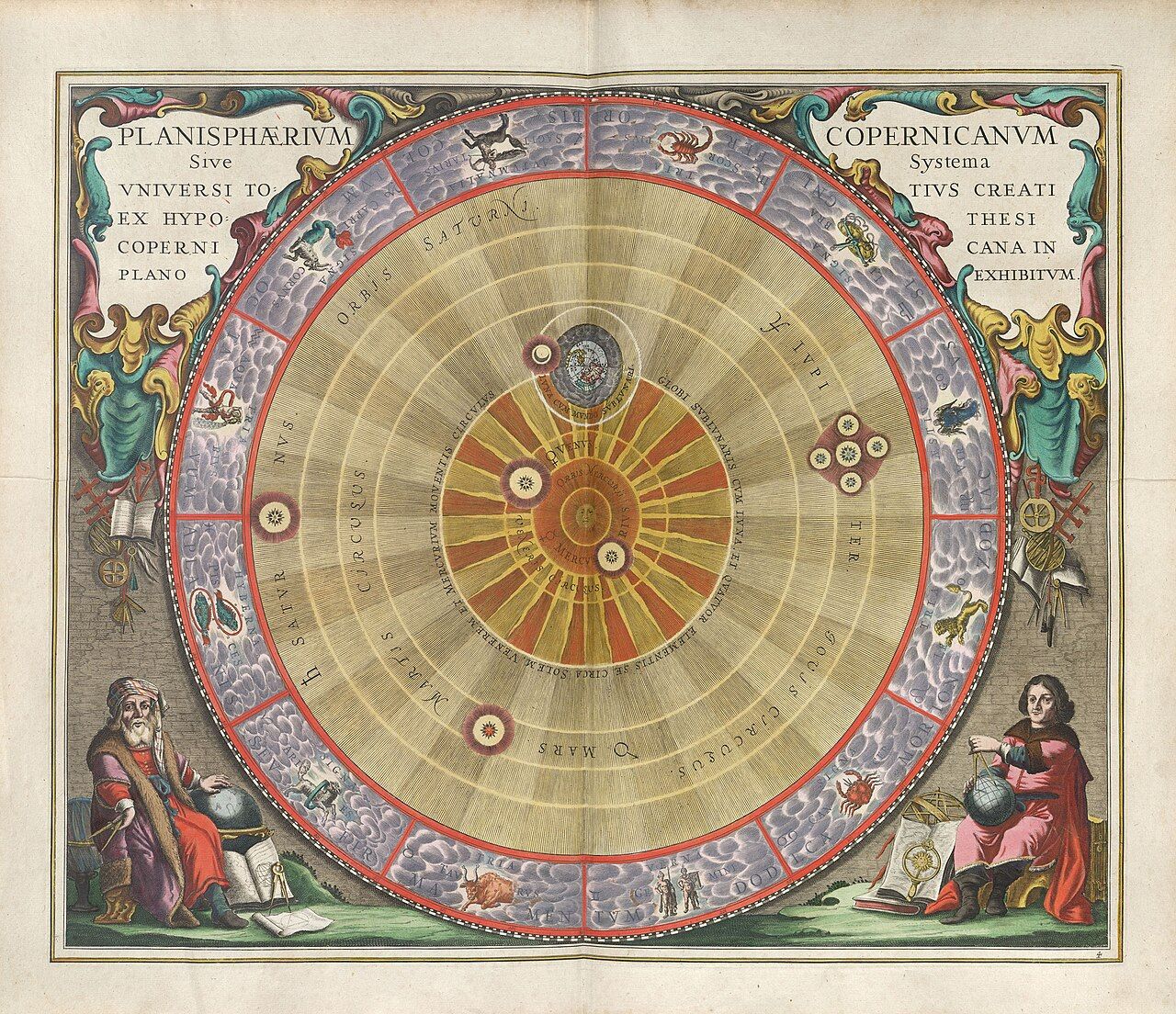
The view
Kuhn took a doctorate in physics at Harvard and then moved into the history of science. The Structure of Scientific Revolutions (1962) offered a new account of how science changes.
Most science, he says, is normal science. A community works within a paradigm: a shared body of theory, exemplary solved problems, instruments and standards that tells its members what the world contains and what a good question looks like. Their work is puzzle-solving. They extend the paradigm and fill in its details, and they do not try to overthrow it. A result that will not fit is first put down to the scientist, not to the theory.
Some misfits resist every effort. Such anomalies build up until the community loses confidence and enters a crisis. Rival frameworks appear. In a revolution one of them takes over, the textbooks are rewritten, and normal science starts again on new terms.
The argument
Kuhn's most disputed claim concerns what happens across a revolution. Successive paradigms, he argued, are incommensurable: there is no common measure by which to compare them point for point. Their key terms change meaning. "Mass" is one thing for Newton and another for Einstein. They disagree about which problems matter and what counts as a solution. Their supporters, he wrote, practise their trades in different worlds.
A change of paradigm is like a switch of visual gestalt: the drawing that was a duck is now a rabbit. Logic and neutral observation cannot force it. After Kuhn, Structure, chapter 10
Choosing a theory is therefore not like checking a proof. Kuhn later listed the values scientists share, accuracy, consistency, scope, simplicity and fruitfulness, and insisted that they guide choice without dictating it. He denied being a relativist. Later science is better at solving puzzles than earlier science. What he would not say is that it comes closer to the truth. He compared its progress to evolution: a movement away from primitive beginnings, with no goal ahead.
Where he meets Deutsch
Kuhn and Deutsch agree that science is not a steady accumulation of facts. Its history is a series of replacements in which a new theory overturns the old one's picture of what exists. Observation is shaped by theory. And the textbook story, in which each generation adds a brick, falsifies how discoveries were actually made.
Kuhn was right about the history as well. Scientists often do hold on to a theory in the face of contrary results, and the holdouts are sometimes right to.
Where they part
Deutsch argues the point directly in The Fabric of Reality. Kuhn's account makes the succession of theories a fact about communities: who was persuaded, who retired, which school won. For Deutsch it is a fact about explanations. General relativity did not replace Newton's theory because a generation changed its allegiance. It replaced it because it solves problems the older theory cannot, and explains why the older theory works as well as it does.
That last point is the answer to incommensurability. If the two theories could not be compared, relativity could not explain Newton's successes, and it does so in detail. A physicist can understand both, and many do.
Popper's objection was to normal science itself. He granted that it exists and called it a danger: the work of someone who has been taught badly and has learned a technique without asking why. For Popper and Deutsch criticism belongs in ordinary science too. A community that had stopped questioning its framework would not be doing science well. And progress has a direction. It is towards better explanations of one real world.
| Kuhn | Deutsch | |
|---|---|---|
| Where does knowledge come from? | Puzzle-solving inside a paradigm that a community shares. | Conjecture: guesses, improved by criticism and experiment. |
| What does justification do? | Standards of justification belong to a paradigm and change when it does. | Nothing. No theory is ever justified, and none needs to be. |
| Can knowledge grow without limit? | Science gets better at solving puzzles, but does not draw closer to the truth. | Yes. Problems are inevitable, and problems are soluble. |
| What is knowledge, physically? | A social possession: the shared practice of a scientific community. | Information that, once embodied, tends to keep itself in existence. |
Further reading
- Thomas S. Kuhn, The Structure of Scientific Revolutions (Chicago, 1962; the second edition of 1970 adds an important postscript).
- Imre Lakatos and Alan Musgrave (eds), Criticism and the Growth of Knowledge (Cambridge, 1970): Kuhn and Popper face to face, including Popper's "Normal Science and its Dangers".
- David Deutsch, The Fabric of Reality (1997), chapter 13.
- Thomas Kuhn, Stanford Encyclopedia of Philosophy.