Vienna, 1924–1994
Paul Feyerabend
Name any rule of scientific method, Feyerabend said, and he would show you a great scientist who broke it and was right to. He called himself an epistemological anarchist, and he enjoyed the trouble it caused.
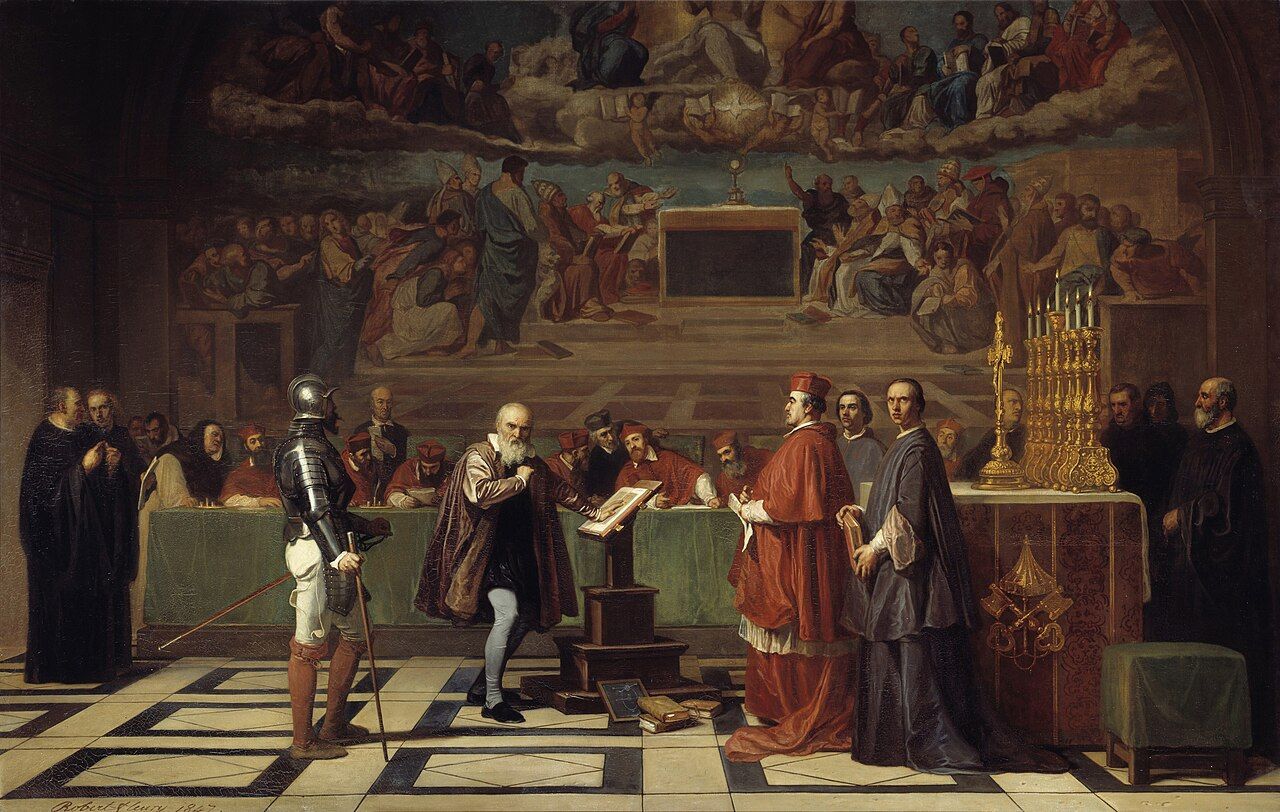
The view
Feyerabend was conscripted into the German army, was badly wounded on the Eastern Front in 1945 and walked with a stick for the rest of his life. He studied in Vienna, spent a year in London attending Popper's seminar, and taught for more than thirty years at Berkeley. Against Method (1975) was planned as half of a debate with his friend Imre Lakatos, who was to write the reply. Lakatos died before he could.
The book's thesis is that science has no method. Every rule that philosophers have proposed, such as "take refutations seriously", "avoid ad hoc hypotheses" or "prefer the theory that fits the evidence", has at some point stood in the way of progress, and the scientists who made the progress ignored it. If you insist on a principle that holds in all circumstances, only one survives, and he gives it in two words: "anything goes".
He meant this as a joke at the rationalist's expense and not as a recommendation. It is what you are left with if you demand a universal rule.
The argument
His main exhibit is Galileo. The strongest argument against a moving Earth was plain observation. Drop a stone from a tower and it lands at the foot. If the Earth were spinning eastwards at hundreds of miles an hour, the tower would have moved on while the stone fell, and the stone would land far to the west. It does not. The Earth is at rest.
Galileo did not answer with a new observation. He changed what the old one meant. The stone shares the Earth's motion before it is dropped and keeps it while it falls, so we see only the part of its motion that we do not share. The fact, in Feyerabend's phrase, contained a "natural interpretation" so familiar that nobody had noticed it was a theory. Galileo exposed it by proceeding counter-inductively: he adopted a hypothesis that contradicted well-established observation and used it to criticise the observation.
Theories should be multiplied, not pruned. A fact that refutes the reigning view may be visible only from inside a rival view, so that uniformity of opinion weakens criticism. After Feyerabend, Against Method
Galileo's telescope was no better founded, Feyerabend adds. Nobody had an optical theory that showed it could be trusted on the heavens, and it gave contradictory results. Galileo prevailed in part by style, by writing in Italian, and by propaganda.
In later work he pushed the conclusion into politics. Science is one tradition among many, with no claim to special authority, and a free society should separate it from the state as it separates the church.
Where he meets Deutsch
More than either might expect. Deutsch also denies that there is a scientific method in the sense of a recipe. Conjectures come from anywhere, including myth and metaphysics, and no rule generates them. Observation is soaked in theory, which is exactly what the tower argument shows. A plurality of rival theories is good for criticism. And science should not be an authority: nobody should accept a result because scientists say so.
Galileo's reply to the tower is itself a model of what Deutsch admires, a better explanation replacing a worse one, with the "refuting" observation reinterpreted in its light.
Where they part
Feyerabend moves from "there is no fixed method" to "there is no objective difference in merit". If no rule separates science from astrology or rain-dancing, they are simply different traditions, each good by its own lights. That is relativism, and Deutsch rejects it.
The absence of a recipe for creating knowledge does not mean the absence of a standard for judging it. Anything goes when proposing an idea. When criticising one, the question is always the same: is this a good explanation, hard to vary while accounting for what it claims to account for? By that standard Galileo's account of the falling stone was not merely more persuasive than Aristotle's. It was better, and the theory of the planets it belonged to was better than its rival, long before the propaganda took effect.
The proposal to treat science as one ideology among many fails for the same reason. The traditions are not equal. One of them has a way of finding its own mistakes.
| Feyerabend | Deutsch | |
|---|---|---|
| Where does knowledge come from? | Anywhere: myth, metaphysics, rival traditions, deliberate rule-breaking. | Conjecture: guesses, improved by criticism and experiment. |
| What does justification do? | Nothing. Standards of justification are local to a tradition. | Nothing. No theory is ever justified, and none needs to be. |
| Can knowledge grow without limit? | No measure of growth is common to all traditions. | Yes. Problems are inevitable, and problems are soluble. |
| What is knowledge, physically? | The practice of a tradition, with no privileged form. | Information that, once embodied, tends to keep itself in existence. |
Further reading
- Paul Feyerabend, Against Method (1975; 4th edn, Verso, 2010). Chapters 6–11 for Galileo.
- Paul Feyerabend, Killing Time (Chicago, 1995): his autobiography, finished in his last weeks.
- Imre Lakatos and Paul Feyerabend, For and Against Method, edited by Matteo Motterlini (Chicago, 1999).
- Paul Feyerabend, Stanford Encyclopedia of Philosophy.